
Concrete Installation & Construction in Flagstaff, AZ
Concrete in Flagstaff doesn’t behave like it does in lower elevation cities. Between winter freezes, soil movement, and summer storms, even small installation mistakes show up fast. Driveways, patios, and slabs need proper base work and drainage from the start. When that part is done right, the concrete holds up much better over time.
Why Choose Us
Structured Approach
Concrete installation requires coordination between planning, preparation, and finishing to ensure a perfect result every time.
Clear Communication
Property owners appreciate clear explanations of site preparation steps to make informed decisions throughout the project.
Realistic Expectations
We explain curing timelines, drainage, and maintenance to prevent misunderstandings and ensure the longevity of your investment.
Built for Flagstaff Weather
Our goal is a surface that performs reliably year after year, standing up to the harsh mountain elements of Flagstaff.
Concrete installation in Flagstaff requires more planning than many homeowners expect. The city sits at high elevation and experiences large temperature swings during the year. Winter freezes, snowmelt, and summer monsoon storms all affect how concrete performs. Because of that, installation must account for soil stability, drainage patterns, and seasonal weather conditions before any concrete is poured.
Most property owners first look for a concrete contractor in Flagstaff when planning a driveway, patio, foundation slab, or walkway. These projects may seem straightforward at first glance. In reality, each surface type requires different preparation steps and reinforcement planning. A driveway must support vehicle loads. A patio must drain water away from the home. A structural slab must distribute building loads safely.
Here’s the thing though. Many concrete failures begin before the concrete is even mixed. Poor soil preparation, insufficient base compaction, or incorrect slope can cause settlement over time. When that happens, cracks appear, surfaces shift, and repairs become necessary.
In our experience, most customers simply want a surface that holds up through winter and stays stable during seasonal changes. Proper installation methods help reduce long term issues. When preparation, reinforcement, and curing are handled correctly, concrete surfaces can perform reliably for many years in Northern Arizona conditions.
Concrete Installation Services in Flagstaff
Concrete installation projects in Flagstaff usually fall into several categories. Some involve structural construction, while others improve outdoor living areas or property access.
Typical installation services include:
- Concrete driveway installation
- Concrete patios and outdoor slabs
- Walkways and sidewalks
- Garage slabs and utility pads
- Structural slab foundations
- Retaining wall bases and flatwork surfaces
Each of these projects begins with site preparation. Soil conditions vary throughout Flagstaff neighborhoods. Areas near Cheshire or University Heights may have different soil composition than properties in Doney Park or Timberline. Soil type affects how water drains and how the ground behaves during freezing temperatures.
Preparation usually begins with grading and excavation. After that, a compacted base layer of aggregate material is installed. This base layer distributes loads and helps stabilize the slab. Reinforcement such as rebar or wire mesh is then placed before concrete is poured.
Customers sometimes ask whether decorative finishes can be added later. In most cases, they can. Decorative work such as stamped or stained surfaces is usually handled separately from structural installation. You can learn more about those finishes on our Decorative & Concrete Repair Services page.
Need a Custom Concrete Solution
Concrete Driveway Installation in Flagstaff
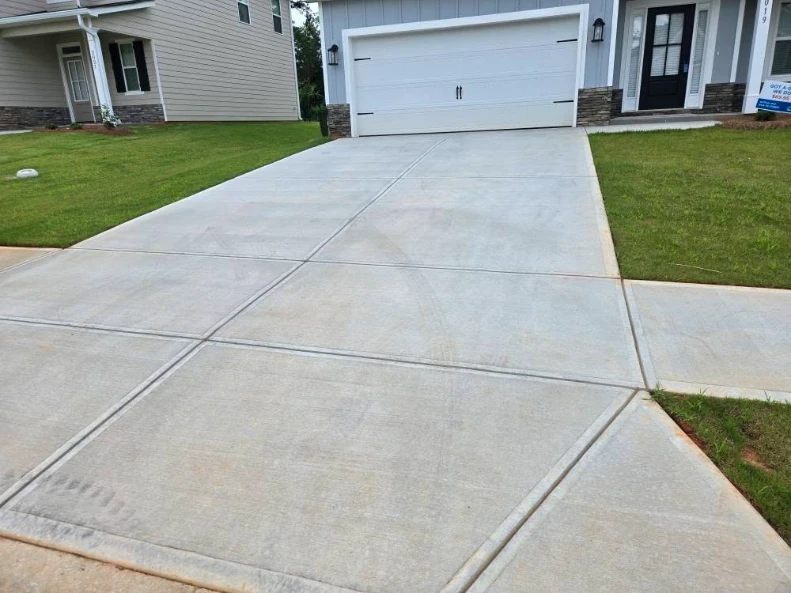
Driveways are among the most common concrete projects in the Flagstaff area. A properly installed driveway provides durable vehicle access and improves the appearance of a property.
New Concrete Driveway Construction
New driveways begin with excavation and soil preparation. The existing surface is graded to create the correct slope. Water must move away from structures and toward drainage areas. Without proper slope, water can collect on the surface and cause damage during freezing temperatures.
After grading, a compacted base layer is installed. This base typically consists of crushed aggregate material that stabilizes the slab. Once the base is compacted, forms are installed to define the driveway shape.
Reinforcement is then placed within the form structure. Reinforcement helps distribute vehicle loads and reduces uncontrolled cracking. Concrete is poured into the forms and finished using techniques such as broom finishing for traction.
Reinforcement and Thickness Planning
Driveway slabs must support passenger vehicles and occasionally heavier trucks. Thickness and reinforcement placement depend on expected loads and soil stability.
Drainage and Freeze Protection
Drainage planning is particularly important in Flagstaff. Snow and ice can accumulate during winter months. When snow melts, water must move away from the slab to prevent freeze damage.
Driveway Replacement and Removal
Older driveways sometimes require removal before replacement. Over time, concrete can deteriorate due to soil movement, moisture intrusion, or heavy vehicle loads. Removing damaged concrete allows the new installation to begin with proper base preparation.
Concrete Patios and Outdoor Living Spaces
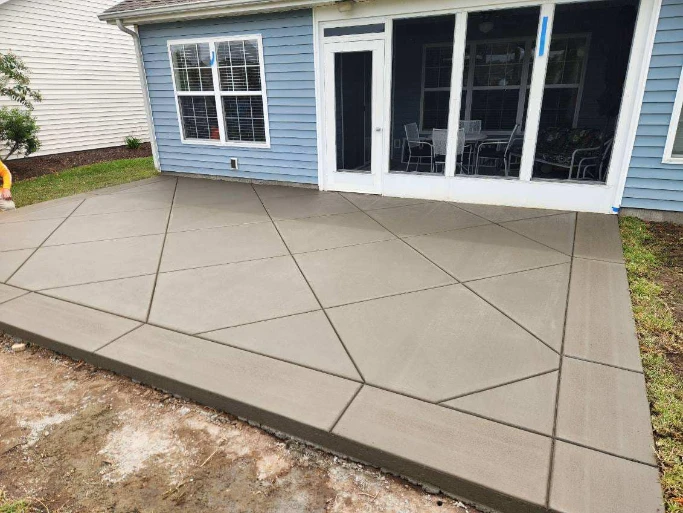
Concrete patios provide outdoor areas for relaxation, dining, and gatherings. Many homeowners choose concrete patios because they are durable and adaptable to different yard layouts.
Entry Porches and Outdoor Slabs
Backyard patios are typically installed on compacted base material similar to driveways. The main difference lies in surface finishing and layout design. Patio slabs often connect to landscape features such as gardens, outdoor seating areas, or pathways.
Entry Porches and Outdoor Slabs
Concrete porches and entry slabs create a stable surface at building entrances. These surfaces must remain level and properly aligned with door thresholds.
Drainage and Surface Slope
Slope planning ensures water drains away from the house. Without proper drainage, moisture may collect against the foundation. Over time, standing water can weaken the surrounding soil and cause structural stress.
Concrete Walkways, Sidewalks, and Entry Steps
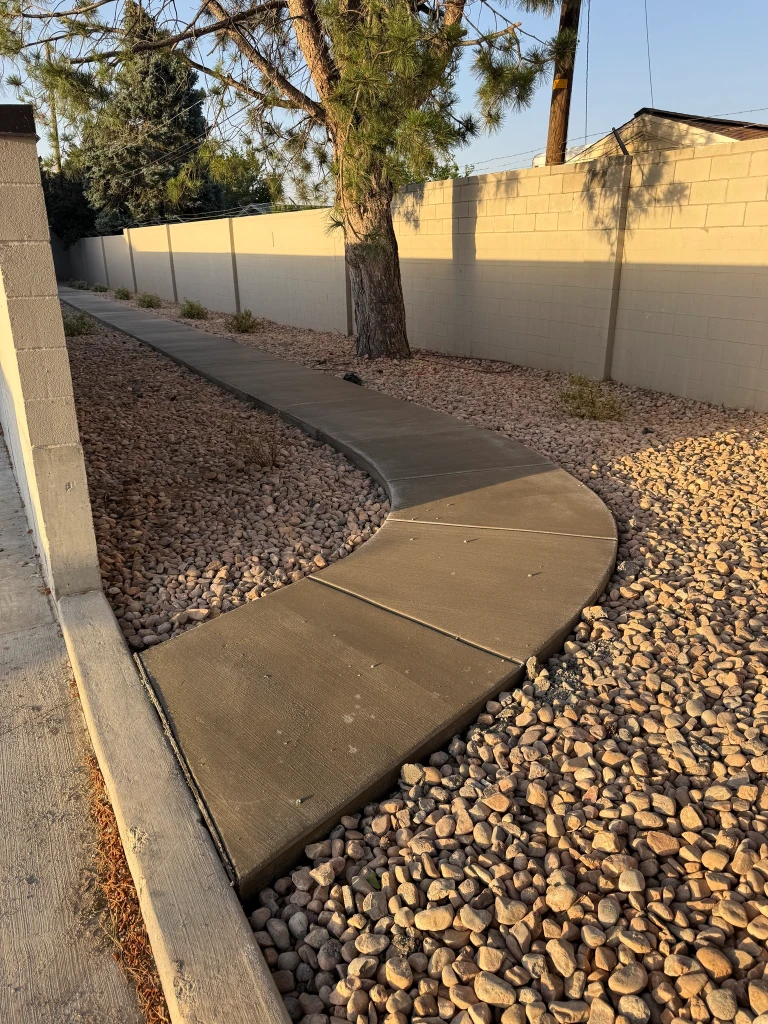
Walkways and sidewalks guide foot traffic across residential and commercial properties. Concrete surfaces provide a durable solution for pathways and access routes.
Residential Walkways
Walkways often connect driveways, patios, and entry doors. Layout planning usually follows natural landscape lines or property boundaries.
Sidewalk Installation
Sidewalk slabs must remain level and safe for pedestrians. Surface textures often include light broom finishes that improve traction during wet or icy conditions.
Concrete Steps
Entry steps require careful formwork and reinforcement. Steps must support repeated foot traffic and remain stable through seasonal weather changes.
Concrete Foundations and Structural Slabs
Structural concrete supports buildings and large structures. Accuracy during installation is essential because these slabs carry significant weight.
Slab on Grade Foundations
Slab on grade foundations are poured directly on prepared soil and aggregate base material. Reinforcement distributes building loads across the slab.
Garage Slabs and Utility Pads
Garage slabs support vehicle weight and equipment storage. Utility pads support outdoor mechanical systems such as HVAC units.
Footings and Stem Walls
Footings distribute building loads across a wider surface area beneath the structure. Stem walls elevate framing above ground level and connect to foundation slabs.
Commercial Concrete Installation
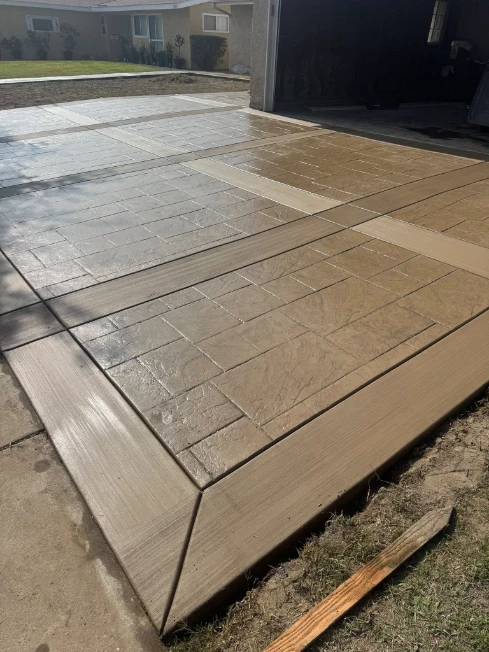
Commercial concrete installation often involves larger surfaces and heavier structural loads.
Commercial Flatwork
Flatwork includes sidewalks, entry slabs, and service areas around commercial buildings.
Access Slabs
Access slabs connect parking areas with building entrances or loading zones.
Structural Surfaces
Certain commercial spaces require reinforced concrete surfaces capable of supporting equipment or frequent vehicle traffic.
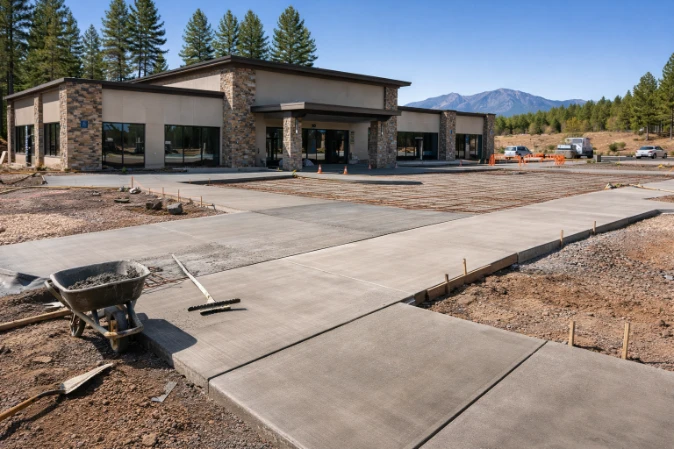
Site Preparation Before Concrete Installation
Preparation determines how well a concrete surface performs over time.
Grading and Base Preparation
Soil is graded to establish proper drainage slope. Aggregate base material is then installed and compacted to stabilize the slab.
Formwork Setup
Forms define the edges and thickness of the slab. Proper form placement ensures the concrete maintains the correct dimensions.
Reinforcement Placement
Rebar or wire mesh distributes stress within the concrete slab. Reinforcement helps control cracking caused by natural movement.
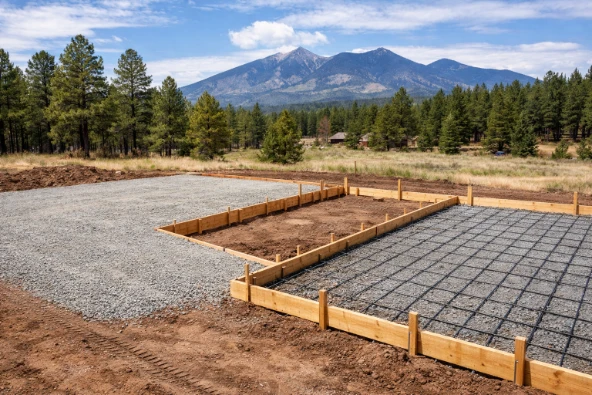
Our Concrete Installation Process
Concrete installation generally follows several stages.
Site Evaluation
The process begins with evaluating soil conditions and drainage patterns. Access for equipment and material delivery is also considered.
Base Preparation
The aggregate base layer is installed and compacted. Reinforcement materials are placed within the forms.
Concrete Pour and Finish
Concrete is poured and leveled within the formwork. Surface finishing techniques depend on the type of installation.
Curing and Final Review
Concrete continues strengthening over time. After installation, the surface is inspected and care guidance may be provided.
Concrete Built for Flagstaff Climate
Flagstaff’s climate affects concrete performance throughout the year. Winter temperatures often drop below freezing, while summer brings warmer conditions and occasional heavy rain.
Freeze cycles can cause small amounts of water inside concrete pores to expand. This expansion creates pressure within the slab. Reinforcement and expansion joints help manage these stresses.
Drainage planning also plays an important role. When water drains away from the slab, freeze related expansion becomes less likely to cause surface damage.
Many homeowners do not realize how much climate influences concrete until problems appear. Planning for these conditions during installation helps improve long term durability.
Areas We Serve in Flagstaff, AZ
Concrete installation services are available throughout Flagstaff and surrounding communities. Service areas commonly include:
Service areas include:
- Kachina Village
- Pine Canyon
- Timberline
- Downtown Flagstaff
- Cheshire
- University Heights
- Doney Park
Projects may also extend to nearby Coconino County communities depending on scheduling and travel distance.
Frequently Asked Questions
Request a Free Estimate
If you are planning a driveway, patio, foundation, or walkway project, the first step is reviewing the site and discussing the installation approach.